Bikepacking Equipment: What You Need for Your First Trip
Bags, repair kit, sleep systems, food, clothing and navigation – a practical guide to the bikepacking gear that matters, and where to find routes.
By Dave Talbot · 7 min read
Bikepacking is simple: you carry everything you need on your bike and ride for more than a day, mostly on trails, forest roads, gravel and quiet lanes. It sits somewhere between mountain biking and backpacking, and it is one of the best ways there is to see wild country. Our own Traws Eryri trip takes riders 205 km across Eryri (Snowdonia), and the first question people ask is always the same: what do I need to bring?
This guide covers the equipment that matters, from bags and repair kit to sleeping, cooking and clothing. For route ideas and detailed gear reviews, the best resource on the web is bikepacking.com, and we link to its guides throughout.
Start with the bike you already have
You don’t need a special bikepacking bike. A hardtail, a full-suspension bike, a rigid mountain bike or a gravel bike can all work. Choose the bike that suits the terrain: for rough, rocky Welsh tracks like the Traws Eryri, a mountain bike with wide tyres is the comfortable choice. Get it serviced before a big trip, fit fresh brake pads and make sure the tyres have plenty of life left. Bikepacking.com’s Bikepacking 101 is a good place to start if you are new to all of this.
Bikepacking bags: where everything goes
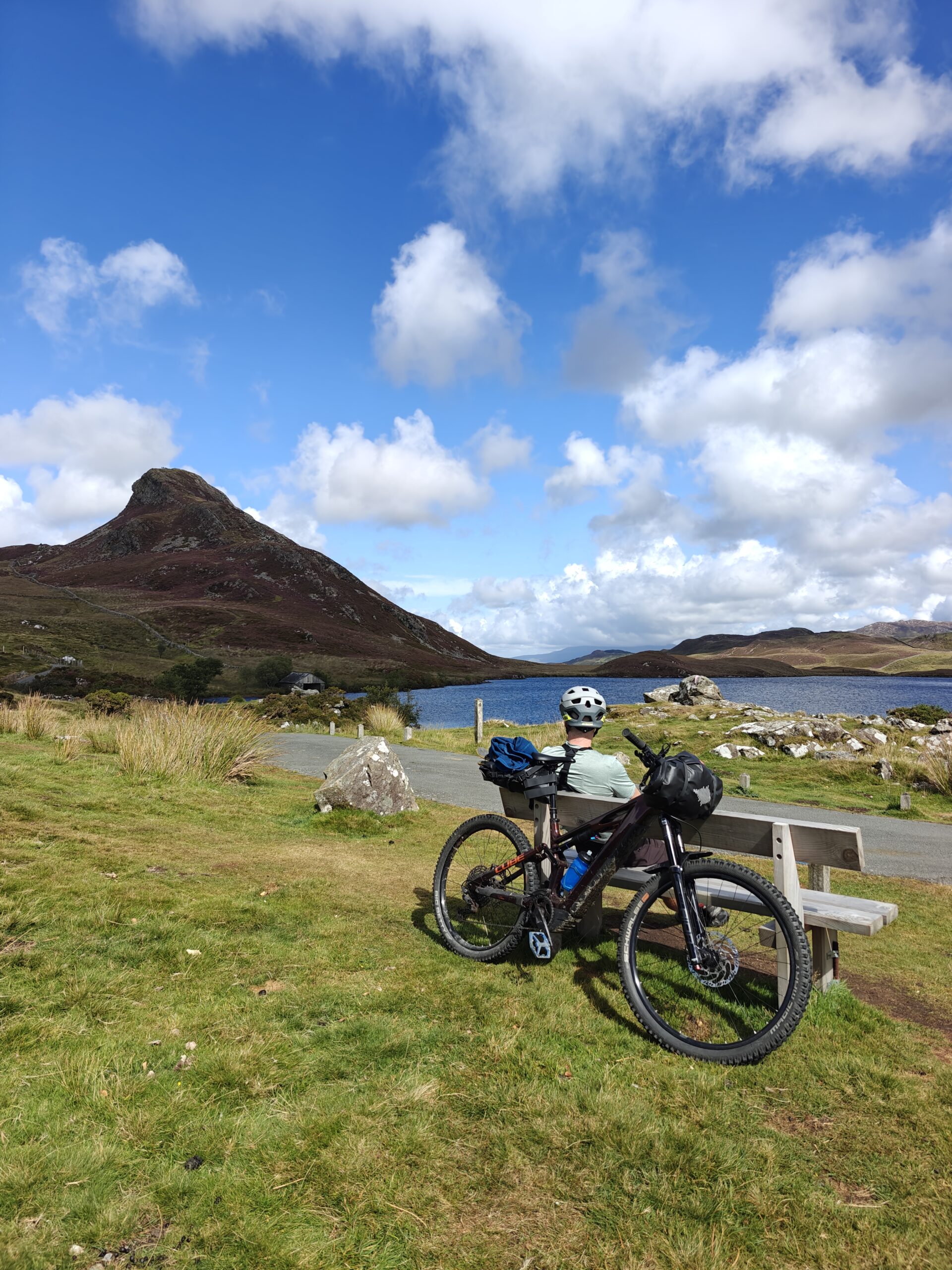
Bikepacking bags strap directly to the frame, handlebars and seatpost, so you don’t need racks. They are quieter and more stable off-road than panniers, but hold less, so packing takes a bit more planning. The main options are:
- Frame bag: fits inside the front triangle. It is the lowest, most stable spot on the bike, so it is the place for heavy, dense items such as food, tools and spares. A half frame bag leaves room for water bottles.
- Seat pack: mounts under the saddle and typically holds 5 to 14 litres. Ideal for clothing and soft, light kit. Some are only water resistant, so a dry bag inside is worth having in Wales.
- Handlebar roll or harness: carries bulky but light items such as a sleeping bag, tent or spare layers. Keep the front light so the steering stays predictable.
- Top tube and stem bags: small bags for snacks, phone, sun cream and anything you want to reach without stopping.
- Fork cages: bolt-on cages that carry extra water or small dry bags if your fork has mounts.
- A small backpack or hip pack: optional, but carry as little on your back as you can.
The golden rule is heavy items low and central, light items at the ends. Spread the weight across the bike rather than overloading one bag, and don’t overstuff zips – they are usually the first thing to fail. Bikepacking.com’s guide to bikepacking bags goes into much more detail.
Repair kit and spares
A mechanical problem miles from the nearest road is the one thing that can end a trip, so this is not the place to save weight. A good core kit is:
- A multi-tool with a chain breaker and the right Allen and Torx sizes for your bike
- A pump that suits your tyre size, plus tyre levers
- One or two spare inner tubes, even if you run tubeless
- A puncture repair kit, tubeless plugs, spare sealant and a tyre boot
- Quick links for your chain and a little dry chain lube
- Zip ties, duct tape and a small pair of pliers
- Spare brake pads and a spare derailleur hanger for longer trips
Check your kit before you go: dried-out patch glue and a pump that doesn’t fit your valves are surprisingly common. See bikepacking.com’s bikepacking repair kit for the full list, including extras for longer expeditions.
Shelter and sleep
If you are camping, your sleep system is usually the bulkiest thing you carry. Most experienced bikepackers use a small, light tent, though a tarp, bivvy bag or hammock all work. Pair it with a sleeping bag or quilt rated for the temperatures you expect, and a sleeping mat with enough insulation (its R-value) to keep the cold ground out. In the UK, nights in the hills can be cold even in summer.
On our guided Traws Eryri trip you stay in accommodation each night and we transfer your luggage, so you can leave the tent at home and ride with a much lighter bike.
Food, water and cooking
Riding a loaded bike all day burns a lot of energy, so carry more food than you think you need and eat little and often. Plan your water around the route: bikepacking.com suggests carrying anywhere from 2 to 6 litres depending on how far it is between refills. In Wales, streams are plentiful, but a filter or purification tablets are essential.
If you are cooking, keep it simple: a small stove, a light pot (around 0.7 to 1.5 litres), a lighter, a mug and a spork, all packed inside the pot. For a first overnighter, many people skip the stove and take a ready-made dinner and breakfast instead.
Clothing for Welsh weather
Layers are everything. Ride in comfortable cycling kit, gloves, a helmet and shoes you can walk in, as there is always some pushing on rough Welsh climbs. Add:
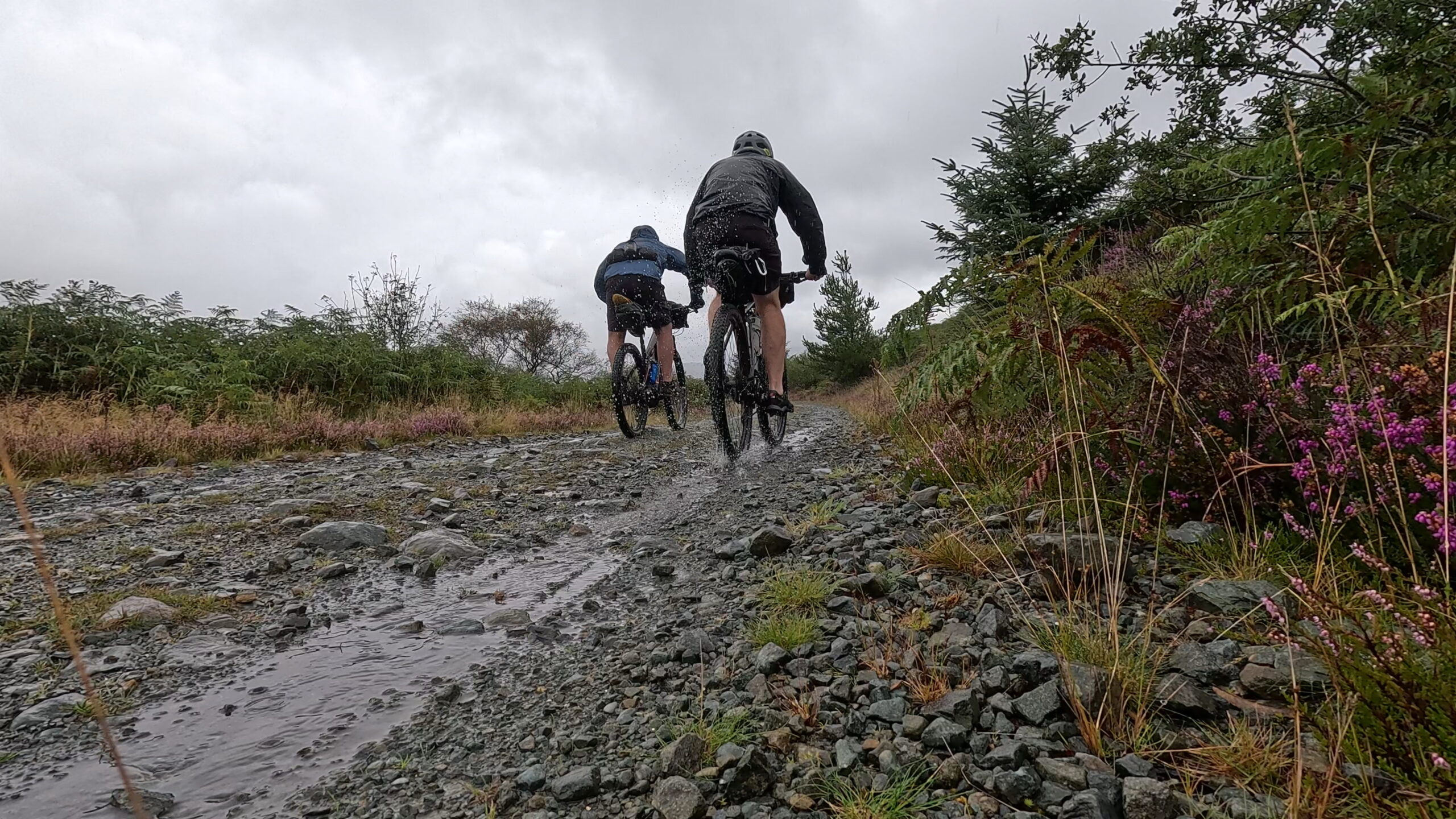
- A properly waterproof jacket – the most important item on any UK trip
- A warm insulating layer for stops and evenings
- Merino or wool base layers, which stay warm when damp and don’t smell after a few days
- Spare dry clothes for the evening, kept in a dry bag
- Waterproof socks or overshoes if the forecast is wet
Navigation, lights and electronics
Most bikepackers navigate with a GPS unit or a phone in a handlebar mount, loaded with the route as a GPX file. Carry a backup copy on a second device, and a power bank of at least 10,000 mAh with the right cables. Add a head torch and a rear light. You can download our Traws Eryri GPX file from the route page.
Safety and first aid
Carry a small first aid kit with plasters, dressings, antiseptic wipes, tweezers, painkillers and antihistamines. Much of upland Wales has no phone signal, so a satellite messenger is worth considering if you are riding remote routes on your own. Tell someone your plans, check the weather before you set off, and plan escape routes. And leave the places you ride as you found them: bikepacking.com’s seven principles for bikepackers are a great guide.
Bikepacking checklist
- Bike and bags: serviced bike, frame bag, seat pack, handlebar roll, top tube bag, dry bags
- Repairs: multi-tool, pump, tubes, plugs, sealant, quick links, zip ties, tape, lube
- Sleep: tent, tarp or bivvy, sleeping bag or quilt, sleeping mat (if camping)
- Food and water: bottles or bladder, water filter, snacks, meals, stove and pot (optional)
- Clothing: waterproof, insulated layer, base layers, gloves, spare evening clothes
- Electronics: GPS or phone, GPX files, power bank, cables, head torch, rear light
- Safety: first aid kit, satellite messenger if riding remote routes, cash and ID
Where to go: finding bikepacking routes
Once your kit is sorted, you need somewhere to ride. Bikepacking.com’s route collection has nearly 500 routes in more than 70 countries, shown on a worldwide map. You can filter them in three useful ways:
- By location: for example routes in Europe, including the UK
- By bike type: mountain bike, gravel or all-terrain routes
- By length: overnighters, weekend trips of 2 to 4 days, week-long routes of 5 to 10 days and longer expeditions
Each route comes with a description, a map, a GPX download and practical notes on water, resupply and terrain. If you are new to bikepacking, start with a short overnighter close to home, keep it simple, and note what you used and what you didn’t. Bikepacking.com has a good guide to planning your first overnighter.
Ride it with us: the Traws Eryri
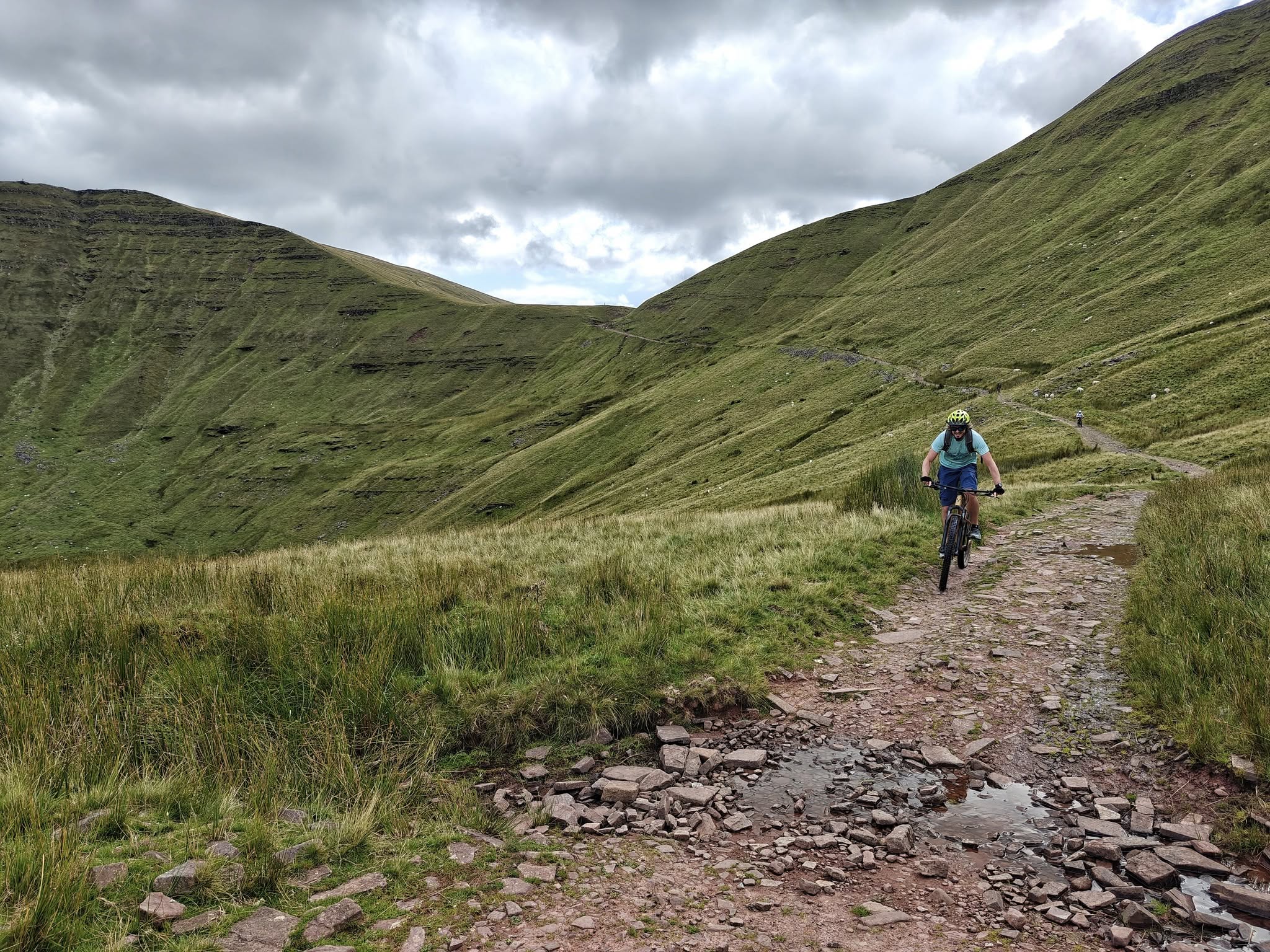
If you would like to try multi-day riding without carrying everything yourself, our guided Traws Eryri trip is a great introduction. It runs 205 km from Machynlleth to Conwy over four days, with mountain bike guiding, accommodation, lunches, luggage transfers and a support vehicle, so all you have to do is ride.
Further reading
Bikepacking 101 – the complete beginner’s guide – bikepacking.com
Guide to bikepacking bags – bikepacking.com
Bikepacking gear and pack lists – bikepacking.com
Guided Traws Eryri mountain bike trip – davetalbot.net
The Traws Eryri
A guided four-day mountain bike adventure across Eryri, from Machynlleth to Conwy. We handle the guiding, accommodation, lunches and luggage, so all you have to do is ride.

Dave Talbot
Dave is a Mountaineering and Climbing Instructor and the founder of Dave Talbot – Adventure Events. Since starting in the outdoor industry in 2002 he has led expeditions from Morocco to the Himalaya, run charity events that have helped raise more than £8.4 million, and climbed new routes on camera for the BBC’s Coast series.
More From the Blog


See all our news and articles.
Plan Your Next Adventure
Tell us what you have in mind – a challenge, a course, an expedition or an event – and we’ll come back with ideas and a quote.