


SCOTTISH WINTER
Scottish Winter Courses available during each winter period between January and March. Other dates on request.
Winter Skills 5 days – £390 pp, 6:1 ratio – 15th to the 19th January 2024
Winter Climbing 3 days (long weekend) – £425 pp, 2:1 ratio – dates on request
Winter Climbing 5 days – £750 pp, 2:1 ratio – dates on request
Private Winter Guiding – £280 1:1 and £150 pp, 1:2 ratio – dates on request
Accommodation can be provided on request with all courses.
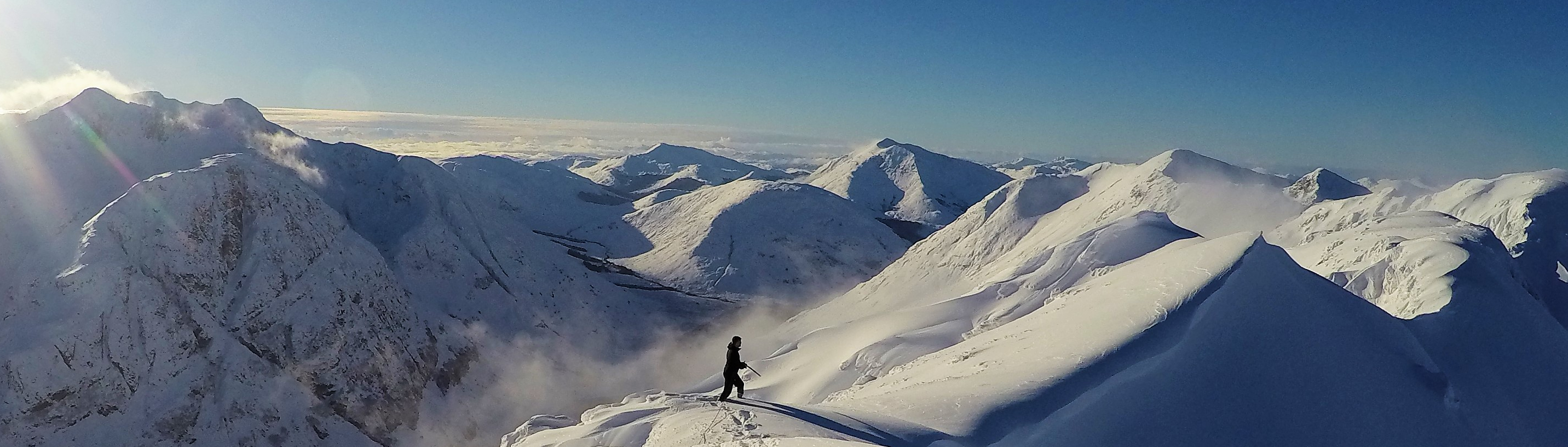
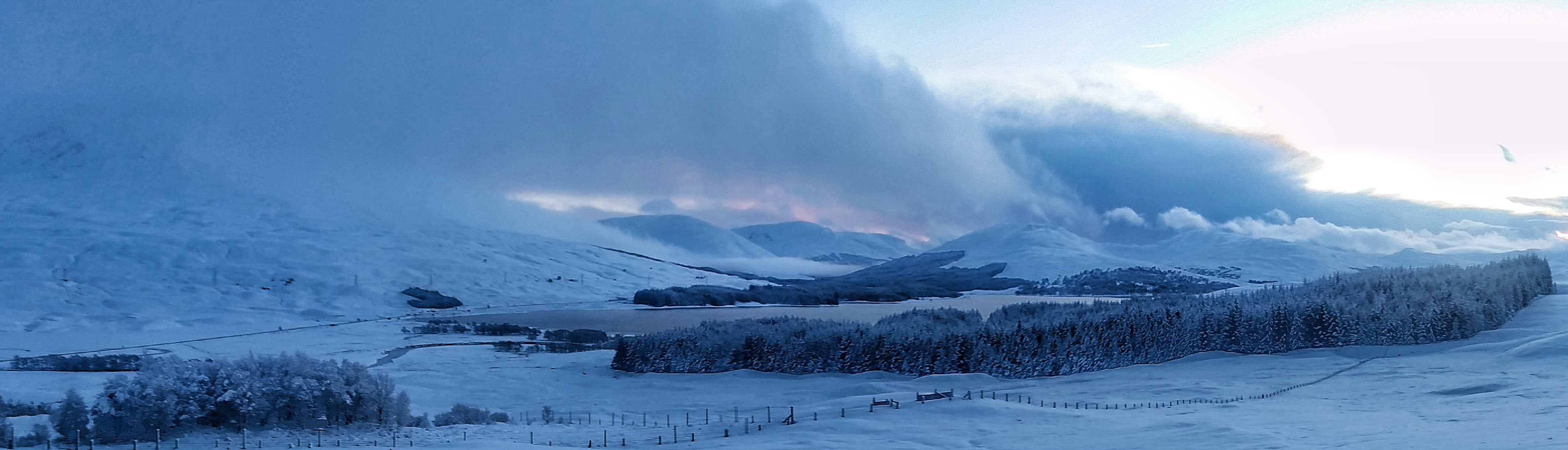
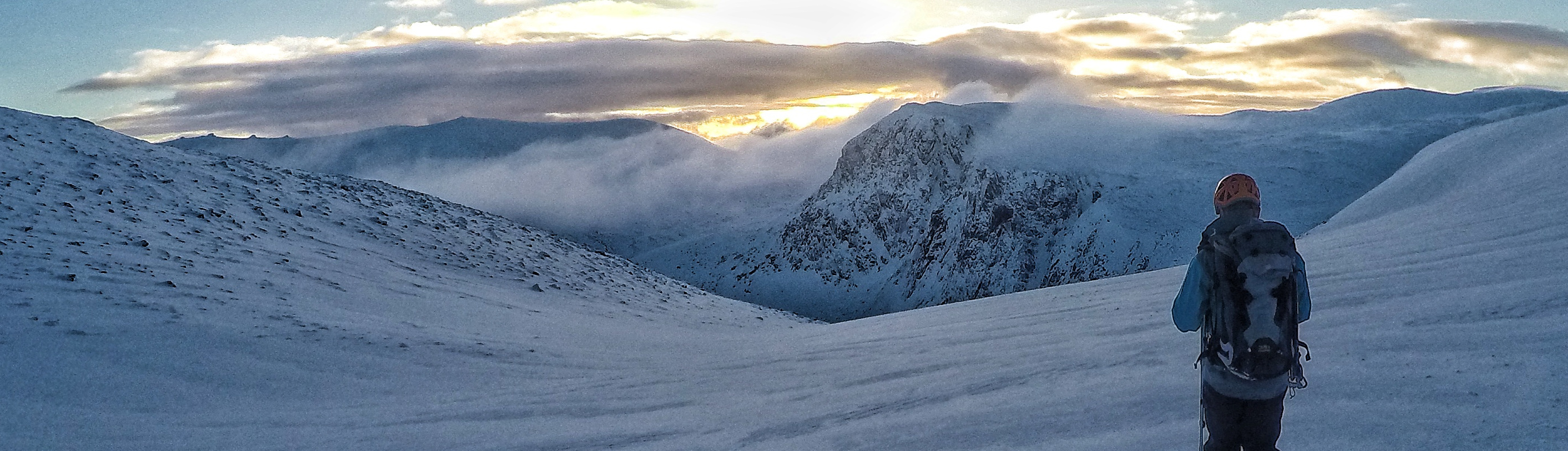
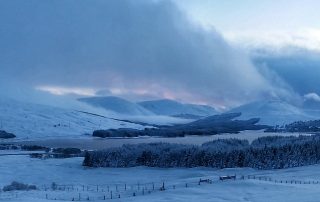
Renowned for having the best mixed climbing in the world, Scotland is the training ground of professionals. If you want an experience worthy of remembering, stunning scenery, quality climbing and guaranteed adventure – winter climbing in Scotland may be for you. This isn’t a beach holiday, this is winter climbing, and Scottish winter climbing is an epic adventure.
All technical equipment is included in the cost of the course but you are expected to have your own personal equipment and clothing. If you need to borrow any equipment for a course, please let us know before hand.


SCOTTISH WINTER SKILLS
This course is designed to give you the skills to get out in the mountains in winter conditions, learning to become independent and safe in the winter environment. You’ll be working in a maximum ratio of 1:6 (instructor to client) to make sure you maximise your learning. Your instructor will coach you in a range of skills for the winter mountain environment.
Course content can include: ice axe use, ice axe arrest, safe travel in the mountains, navigation, understanding weather and avalanche forecasts, snow pack analysis, rope work, snow belays, and of course reaching some of Scotland’s superb mountain summits.
Course costs – £390 per person. Accommodation on request.
SCOTTISH WINTER CLIMBING – LONG WEEKEND
Our Scottish winter climbing long weekend is designed to give you a great taster into winter climbing. With three action-filled days based over a long weekend, you have the choice of adding Friday or Monday to the weekend to suit your travel/work needs.
You’ll be in a 1:2 ratio to maximise your time on the climbs and get the most from your three days. In order to come on the course, you will need some previous winter skills training and be familiar with crampons and ice axe use. You don’t need to have done multi-pitch winter climbing before as your instructor will teach you the full range of skills needed for Scottish winter climbing.
Course content can include: pair ice axe use, movement coaching, winter belays, stance management, rope work, gear placements for winter, safe travel in the mountains, winter route choice, guide book use in winter, navigation, understanding weather and avalanche forecasts, snow pack analysis, rope work, snow belays, and of course lots of great winter routes.

SCOTTISH WINTER CLIMBING – 5 DAYS
This is a 5 day action packed Scottish winter climbing course. This course is designed to get you feeling comfortable seconding Scottish winter climbs and moving through the mountains in a winter environment. If you have climbed in winter before then this course will be perfect to get you into leading winter routes.
You’ll be in a 1:2 ratio to maximise your time on the climbs and to get the most from your 5 days. In addition to practical work, there are some theory sessions on this course, such as being able to read weather and avalanche forecasts to help you plan days out.
In order to come on the course, you will need some previous winter skills training and be familiar with crampons and ice axe use. You don’t need to have done multi-pitch winter climbing before as your instructor will teach you the full range of skills needed for Scottish winter climbing.
Course content can include: pair ice axe use, movement coaching, winter belays, stance management, rope work, gear placements for winter, safe travel in the mountains, lead climbing, winter route choice, guide book use in winter, navigation, understanding weather and avalanche forecasts, snow pack analysis, rope work, snow belays and lots of great winter routes.
This course can be run Monday to Friday or over a weekend.

GUIDED WINTER CLIMBS
Our winter climbing guided days offer you the chance to climb some of the best routes, and with your own private guide, you’ll get what you want ticked off. Either run with a 1:1 or 1:2 instructor to client ratio.
WHAT’S INCLUDED
- Experienced UK guide/instructor (first aid qualified)
- Transport to the crag each day
- Technical equipment (if needed)
- Photos maps/guide books
- A fun and outgoing instructor
- After course information and advice

WHAT’S NOT INCLUDED
- Flights/transport to Scotland
- Food (unless arranged)
- Accommodation (unless arranged)
- Travel insurance
- Personal spending money/tips
- Fitness – please do what you can to turn up fit for the course 🙂
- Personal equipment
CONTACT US FOR YOUR SCOTTISH WINTER COURSE
WHAT CLIENTS SAY
SCOTTISH WINTER CLIMBING KIT LIST
Below are some Scottish winter equipment essentials. If you book a course with us, we’ll send you a detailed kit list and joining instructions. If you have any questions on equipment choices for a course then feel free to get in touch.
Here are some top tips on winter climbing from UKC.
A large holdall – A large holdall bag or very large rucksack (around 100 litres in size). This is to store all of your mountain clothing and equipment.
Rucksack– Your rucksack for the winter environment needs to be around 40 litres in capacity, so that you can fit all your spare kit, flask, food, hats, gloves, crampons etc in. This is the rucksack that you will wear when on the mountain, so it must be comfy. Rucksacks aren’t waterproof so make sure you have a liner or multiple waterproof bags inside to keep things dry.
Boots – Winter boots must be able to take a crampon and kick steps into hard snow, and need to be more rigid in the shank and on the sole section. Walking boots are classed as B0 (zero), B1, B2 or B3. B0 boots do not support crampons and should not be used.
B1 or B2 boots will support crampons. These boots are good for winter skills courses. Go for B1 boots if you think you’ll be venturing out onto very easy winter walks now and again. Go for B2 boots if you think you’ll be going up slightly steeper routes or scrambles. If you’re on a Scottish winter climbing course then you’ll need a B3 boot.
Crampons – These should be compatible with, and fit your boots. Crampons are similarly graded to boots going from C1, C2 to C3. C3 crampons are high end crampons aimed at steep winter climbing. You should go for a C1 or C2 crampon if you’re on a winter skills course. A higher C rated crampon should be used if you are on a Scottish winter climbing course.
Ice axe – A walking axe is needed for a winter skills course. It should be 50-65 cm in length and dictated to some degree by your height. Two technical climbing axes are used for winter climbing courses. These can be borrowed for the duration of your course.
Gloves – Bring at least 3-4 pairs. The winter environment in Scotland can be damp and once your gloves are wet they’re not as warm as when dry. Changing your gloves regularly keeps your hands toasty and warm. You’ll need:
- One thin pair for walking in, with an under glove if needed.
- Two midweight climbing gloves – these want to fit well and be warm, but you also need to be able to perform simple tasks such as tying and untying knots in them.
- One very warm pair – you’ll need a big pair of very warm gloves. These can be mittens or over gloves. Just make sure that they’re warm enough to get your hands from cold to toasty warm.
Thick socks – try Thorlo or Smartwool winter walking socks; wearing two thin pairs works for some people. Make sure you try out your boots and socks before turning up on a course. Cotton socks are useless in the winter environment, and having cold feet or hands is one the biggest annoyances people suffer with on courses so make sure you get the right ones.
Goggles – Ski goggles are not to be left behind. They are essential in bad weather and snowstorms so that you can see and move around easily. If you can, get a pair of goggles that have a clear lens.
Down jacket – Whilst not essential, this is a great item to just shove over the top of your shell jacket for lunch stops or when you’re feeling a bit cold. Down doesn’t like the damp conditions, so a synthetic jacket is a much better option. If you haven’t got a down jacket, a thick fleece will do the job.
Small flask – A flask is another item I wouldn’t leave the house without. Having a hot drink on the mountain in winter is a superb morale boost and allows you to stay hydrated and warm.
Camera – A good quality camera is very important to snap up those moments. The guide on your course will also carry a camera and all photos of the trip will be shared at the end free of charge.